

The Future of Industrial IoT: Integrating Gas Detectors into Smart Factories
Practical integration patterns for safety and operations teams: use 4–20mA, RS485/Modbus or wireless protocols to bring gas detector data into SCADA, PLCs and cloud analytics—without sacrificing reliability or safety.
Scope: Fixed & portable detectors
Focus: 4–20mA, RS485/Modbus, wireless
Audience: engineers, integrators, maintenance leads
Executive summary
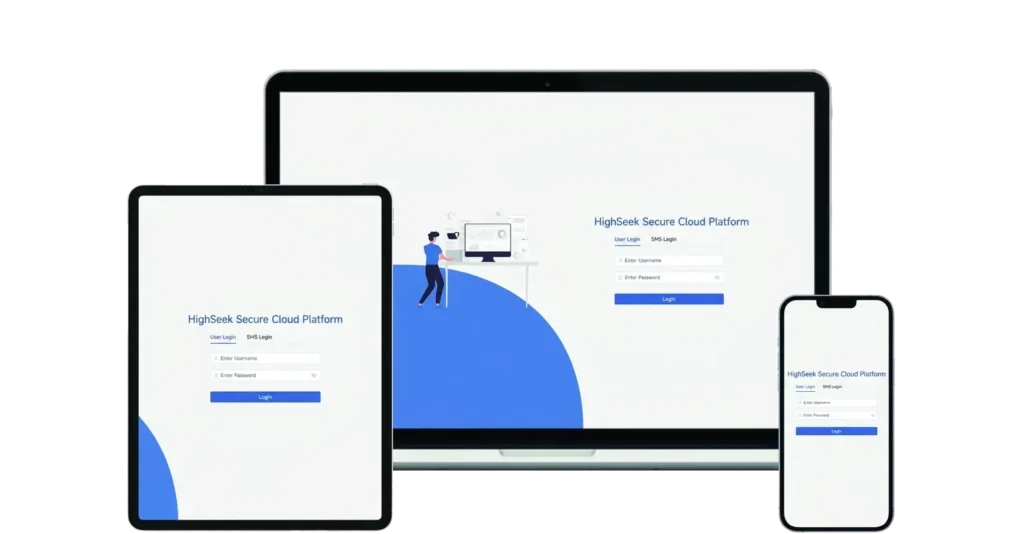
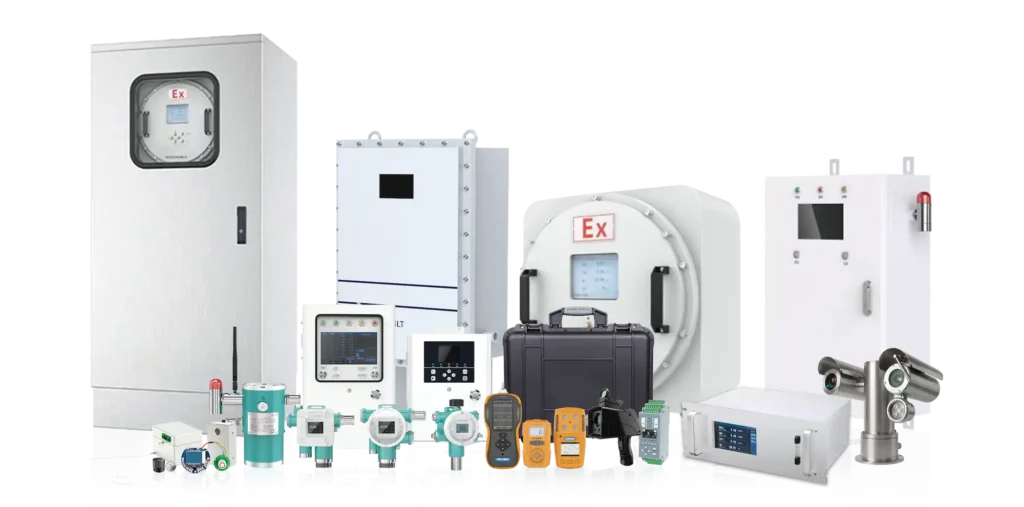
Integrating gas detectors into Industry 4.0 stacks unlocks predictive maintenance, centralized alarm management and automated safety responses. HighSeek devices support traditional industrial interfaces (4–20mA, RS485/Modbus) and modern wireless/cloud protocols (MQTT via gateways, LoRaWAN, LTE). This guide explains trade-offs, architecture patterns, and a practical rollout checklist for engineering teams.
Protocol primer — how each option works and when to use it
| Interface | How it works | Best use |
|---|---|---|
| 4–20mA | Analog current loop proportional to gas concentration (scaled to engineering units). Simple, robust and widely supported by PLCs/SCADA. | Short runs in industrial plants where deterministic, noise-resistant signals and simple integration are required. |
| RS485 / Modbus RTU | Serial bus allowing multiple devices on one pair; supports digital data, device addressing and diagnostics via Modbus registers. | Distributed fixed detectors with need for richer telemetry (status, error codes) over moderate distances. |
| Modbus TCP / Ethernet | Modbus over IP via Ethernet—higher speed, native network support, easier integration with modern SCADA/IIoT software. | Greenfield sites or retrofits where Ethernet infrastructure exists or will be deployed. |
| Wireless (LoRaWAN, NB‑IoT, LTE) | Low-power long-range or cellular links via gateways to cloud brokers (MQTT/HTTP). Ideal for remote or distributed sites. | Remote tanks, solar farms, wind bases, or any location where cabling is costly or impractical. |
| MQTT / Cloud APIs | Publish/subscribe lightweight messaging suited for telemetry, with TLS security and retained topics for reliability. | Use with cloud analytics, mobile dashboards and predictive maintenance pipelines. |
Recommended architectures
Three practical patterns used in HighSeek deployments:
- PLC/SCADA-native (4–20mA + discrete): use 4–20mA loops for LEL/O2 channels and relay outputs for alarms. Advantage: deterministic PLC control and existing operator panels.
- Digital field bus (RS485/Modbus): chain multiple detectors to an RTU or gateway. Advantage: device-level diagnostics, reduced wiring and per-sensor configuration over Modbus registers.
- Edge-to-cloud (Wireless + MQTT): battery-backed detectors or fixed units connect via LoRaWAN or cellular gateways that publish to an MQTT broker and HighSeek Cloud for analytics and notifications.
Gateway & edge considerations
Gateways translate field protocols into IP and MQTT and perform local buffering, local alarm logic and secure tunneling. Key features to specify:
- Protocol bridging: 4–20mA/A/D inputs, RS485 master for Modbus RTU, Modbus TCP, and MQTT client support.
- Edge rules: local alarm tiers, time-based sampling, and hysteresis to avoid nuisance notifications.
- Security: TLS for cloud; VPN or SSH for management; role-based access control for device provisioning.
- Redundancy: store-and-forward for intermittent cellular links and heartbeat monitoring.
Scaling & data model
Design a consistent data model early: device ID, sensor channels, units, calibration metadata, battery status and health counters. Standardize on JSON telemetry with fields for timestamp, raw value, scaled engineering units and status flags. This simplifies SLAs and analytics.
Cybersecurity & compliance
Keep safety systems segregated: critical shutdown logic should remain on trusted PLC/RTU layers. IIoT telemetry can coexist for visibility, but alarm actuation paths must follow validated and auditable controls.
Apply secure defaults: unique device credentials, rotated certificates, network segmentation (VLANs/DMZs), and least-privilege access for operators and integrators.
Deployment checklist
- Map signals: which channels need 4–20mA vs digital telemetry vs wireless?
- Define data retention and sampling rates for compliance and analytics.
- Select gateways with the required protocol support and edge compute.
- Plan calibration and bump-test workflows integrated with your CMMS.
- Document alarm tiering and automated responses; test in a controlled drill.
- Validate cybersecurity posture: penetration test gateway endpoints and cloud APIs before go-live.
Case example — three-facility roll-out
Challenge: an industrial group needed centralized visibility across three plants with different infrastructures. HighSeek provided:
- Plant A: 4–20mA integration to existing PLCs for deterministic shutdowns.
- Plant B: RS485/Modbus network to an edge gateway exposing Modbus TCP to SCADA; allowed device-level diagnostics.
- Plant C: remote compressors with LoRaWAN + cloud telemetry for supervisors and predictive maintenance.
Outcome: unified dashboard, 40% faster alarm triage, and reduced site visits via remote health checks—payback in 14 months.
Practical tips for engineers
- Prefer digital (Modbus/MQTT) where you need diagnostics and remote config.
- Use 4–20mA when signal determinism and electrical noise immunity matter most.
- For remote installs, prove connectivity with a pilot gateway and simulate alarm loads.
- Automate calibration reminders and store calibration certificates with each device record.
HighSeek supports
Integrating gas detectors into Industry 4.0 stacks delivers safety, efficiency and data-driven maintenance. HighSeek supports complete integration: field devices, gateways, cloud telemetry and commissioning services—helping teams move from isolated sensors to a unified, secure monitoring platform.
Published by HighSeek Technology. Keywords: IIoT, gas detectors, 4-20mA, RS485, Modbus, LoRaWAN, MQTT, Industry 4.0.