

Catalytic Bead vs Infrared Sensors: Choosing the Right Tech for Combustible Gases
A clear, engineer-focused comparison to help you match sensor technology to process conditions, maintenance budgets and safety goals.
Primary focus: LEL combustible gas detection
Audience: engineers & procurement teams
Goal: select best-fit sensor tech per environment
Executive summary
Catalytic bead (pellistor) and infrared (IR) sensors are the two dominant technologies for lower explosive limit (LEL) monitoring. This guide compares their detection principles, strengths, limitations and operational costs so engineers can choose the right approach for pipelines, storage, confined spaces, or process vents.
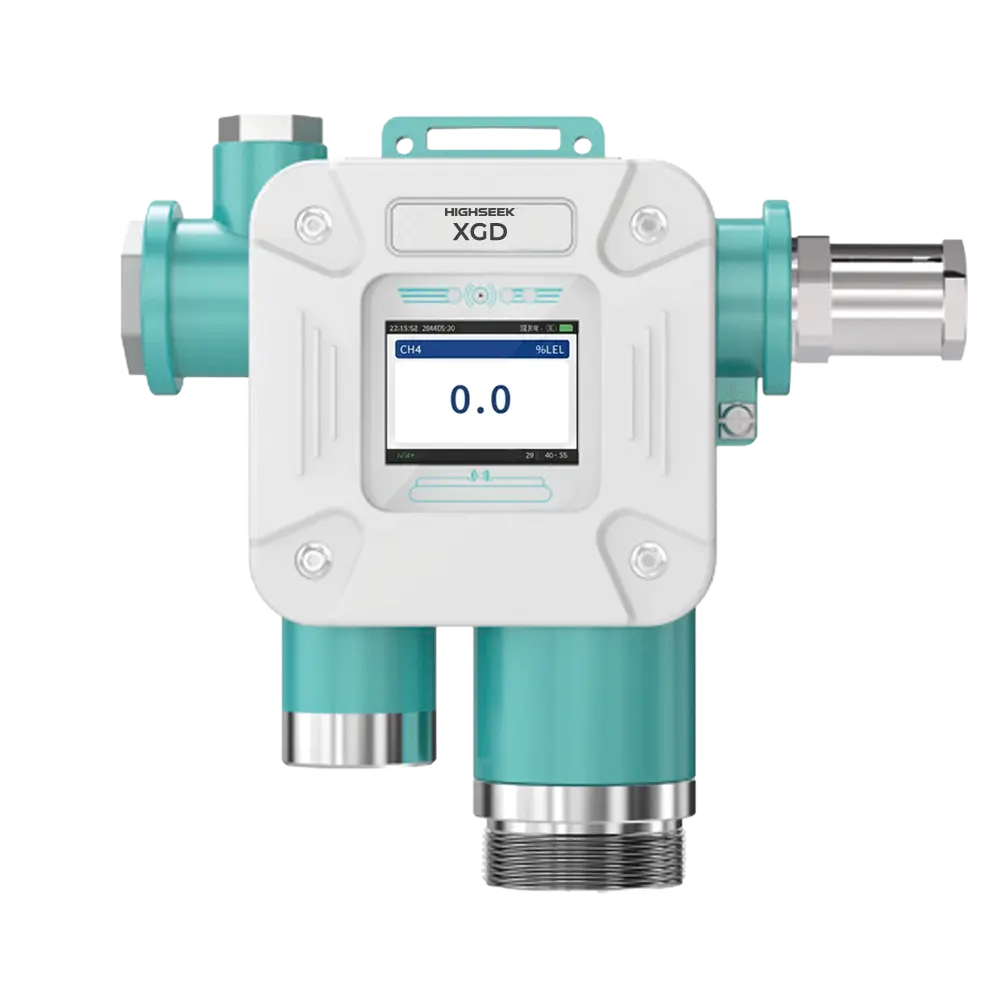
How each technology detects combustible gases
Catalytic bead (pellistor): oxidation on a heated catalytic bead produces heat proportional to combustibles present; measured as resistance change. Simple, time-tested and effective across many hydrocarbons.
Infrared (NDIR / IR): measures gas absorption at characteristic IR wavelengths. Optical method that reads hydrocarbon concentration without requiring catalytic oxidation.
Side-by-side comparison
| Factor | Catalytic Bead | Infrared (IR) |
|---|---|---|
| Detection scope | Broad hydrocarbon sensitivity (LEL). Responds to most combustible gases that burn on the bead. | Selective — optimized to target specific gas families (e.g., methane, hydrocarbons with C–H bonds). Better for methane and many natural gases. |
| Poisoning & contamination | Susceptible to poisoning (siloxanes, sulfur compounds, halogens) and coating by dirt — performance degrades. | Highly resistant to poisoning; optics are affected less by chemical contaminants, but lenses require cleanliness. |
| Maintenance | Periodic replacement of bead, frequent bump testing and inspection in harsh environments. | Lower routine replacement; optical windows require cleaning and occasional alignment checks. |
| Response time | Fast response on many hydrocarbons; can be slower if bead requires temperature stabilization. | Very fast and stable response for target gases; typically consistent T90 times. |
| Lower explosive limit (LEL) linearity | Linear across much of the LEL range but may vary per gas; requires gas-specific calibration factors. | More linear and accurate for methane and many light hydrocarbons; easier gas-specific calibration. |
| Intrinsic safety & cost | Lower initial cost; simple design; widely used in fixed installations. | Higher upfront cost but lower lifecycle service in contaminant-heavy sites; cost gap narrows over asset life. |
| Best fit environments | Clean gas streams, general plant air, enclosed spaces with low contamination risk. | Oil & gas, biogas plants, compressors, or sites with siloxanes/sulfur where poisoning is likely. |
When to prefer catalytic bead
- Low-budget fixed monitoring where environmental contamination is limited.
- Environments where a broad sensitivity to many hydrocarbons is desired and routine maintenance is scheduled.
- Applications with proven maintenance discipline (regular bump tests & bead replacement).
When IR is the better choice
- Biogas, landfill or wastewater sites with siloxanes and sulfur compounds that poison pellistors.
- Operations requiring methane-specific accuracy (e.g., custody transfer, compressor stations).
- Remote, hard-to-service locations where reduced maintenance improves uptime.
Practical selection checklist for engineers
- Map the gas species expected on site (methane vs heavier hydrocarbons; siloxanes, H2S, VOCs).
- Assess contamination risk: siloxanes, silicones, halogenated compounds and heavy particulates.
- Estimate maintenance capacity and interval tolerance (daily/weekly vs quarterly).
- Compare total cost of ownership (initial + maintenance + downtime risk).
- Confirm compatibility with control systems (4–20 mA, Modbus, HART, or digital outputs) and approvals (ATEX, IECEx, UL).
Installation and commissioning tips
- For catalytic bead, ensure adequate ventilation and avoid mounting directly in dusty or oily plumes; use purge housings where needed.
- For IR, protect optical windows with filters and plan cleaning cycles; avoid direct contact with condensate.
- Calibrate sensors using appropriate span gases and document gas-specific correction factors for pellistors.
- Perform bump tests after installation and again after process changes that could alter ambient atmosphere.
Case example — compressor station decision
At a midstream compressor site with known siloxane traces, catalytic sensors showed progressive sensitivity loss within months. Switching to IR lowered maintenance visits from monthly to quarterly and reduced false alarms. Upfront cost rose 25%, but total lifecycle costs fell due to fewer replacements and less downtime.
Summary recommendations
Choose pellistors for low-contamination, cost-sensitive deployments with robust maintenance. Choose IR where poisoning risk, methane-specific accuracy, or remote uptime is critical. When doubt exists, pilot both technologies in parallel for 30–90 days and compare drift, alarms, and maintenance load under real conditions.
HighSeek support
HighSeek helps engineering teams evaluate sensor fit: site surveys, pilot installations and TCO comparisons. For assistance, HighSeek provides on-site trials, cloud-based health monitoring, and service plans tailored to your maintenance capabilities.
Published by HighSeek Technology. Keywords: catalytic bead, infrared sensor, LEL detection, sensor poisoning, gas detector selection.