

Gas Detector for Battery Leak Detection: What Gases Should You Monitor?
Battery systems are becoming increasingly important in energy storage, industrial backup power, telecommunications, electric vehicles, and battery manufacturing. As battery installations become larger and more energy-dense, detecting hazardous gases at an early stage is an important part of battery safety.
A gas detector for battery leak detection can provide an additional layer of protection by continuously monitoring the atmosphere for gases associated with battery leakage, off-gassing, electrolyte decomposition, or abnormal battery conditions.
However, there is no single gas that applies to every battery technology. The appropriate detection strategy depends on the battery chemistry, enclosure design, operating conditions, ventilation, and potential failure modes.
For fixed installations such as battery rooms and battery energy storage systems (BESS), a fixed gas detector can provide continuous monitoring and integrate gas alarms with ventilation, control systems, and emergency response equipment.
Why Do Batteries Release Hazardous Gases?
Different battery chemistries can produce different gases during normal operation, charging, leakage, degradation, or failure.
For example, lead-acid batteries can generate hydrogen during charging. If hydrogen accumulates in an inadequately ventilated battery room, it can create a flammable atmosphere.
Lithium-ion batteries present a different challenge. Under abnormal conditions, including overheating, cell damage, overcharging, or thermal runaway, battery cells can release a mixture of gases. Depending on the cell chemistry and failure mechanism, these may include volatile organic compounds (VOCs), carbon monoxide (CO), carbon dioxide (CO₂), hydrogen (H₂), and other decomposition products.
The exact gas composition can vary significantly.
Therefore, battery gas detection should be designed around the specific battery chemistry and risk assessment rather than assuming that one gas detector is suitable for every application.
What Is Battery Leak Detection?
Battery leak detection generally refers to identifying abnormal conditions in which a battery releases liquid electrolyte, vapor, or gases into the surrounding environment.
Traditional battery monitoring may focus on:
- Voltage
- Current
- Temperature
- State of charge
- State of health
- Cell imbalance
- Battery management system (BMS) alarms
Gas detection provides another layer of monitoring by looking at changes in the surrounding atmosphere.
This can be particularly useful in enclosed or semi-enclosed environments where released gases may accumulate before becoming visible or before a conventional smoke or fire detector responds.
A battery gas detector does not replace a BMS, smoke detector, temperature sensor, or fire detection system. Instead, it can complement these systems as part of a broader battery safety strategy.
What Gases Can Be Released From Batteries?
The gases of interest depend on battery chemistry and operating conditions.
| Gas | Possible Battery Source | Main Hazard | Detection Consideration |
|---|---|---|---|
| Hydrogen (H₂) | Lead-acid battery charging and electrochemical reactions | Flammable | Important for battery rooms and enclosed areas |
| VOCs | Electrolyte and organic material decomposition | Flammable/toxic depending on compound | Relevant to lithium-ion battery off-gassing |
| Carbon Monoxide (CO) | Battery decomposition and thermal events | Toxic | Can indicate abnormal battery conditions |
| Carbon Dioxide (CO₂) | Electrolyte and material decomposition | Asphyxiation at high concentrations | Can contribute to gas monitoring strategies |
| Other decomposition gases | Battery chemistry and failure mechanism | Depends on gas | Application-specific detection may be required |
This is why selecting a gas detector for batteries should begin with identifying the battery chemistry and the gases that represent the most relevant hazards.
Gas Detection for Lithium-Ion Battery Safety
Lithium-ion batteries require particular attention because abnormal cell conditions can lead to gas generation before or during thermal runaway.
When a lithium-ion cell experiences abnormal conditions, chemical reactions can cause electrolyte decomposition and the release of gases. This process may produce an off-gas mixture containing combustible, toxic, or otherwise hazardous components.
Gas detection can therefore be considered as an early-warning layer in a battery safety system.
A typical safety architecture may combine:
- Battery Management System (BMS)
- Temperature monitoring
- Gas detection
- Smoke detection
- Fire detection
- Ventilation
- Alarm and control systems
- Emergency shutdown or response procedures
The purpose of gas detection is not to guarantee prevention of thermal runaway. Instead, it can provide additional information about abnormal battery conditions and potentially allow operators or control systems to respond earlier.
For large battery installations, continuous atmospheric monitoring can be particularly valuable because a fixed detector can operate continuously without requiring an operator to manually inspect each battery enclosure.
Battery Gas Detection vs. Smoke and Temperature Detection
Gas detection provides a different type of information from conventional fire and battery monitoring technologies.
| Detection Method | What It Detects | Main Advantage | Limitation |
|---|---|---|---|
| Gas detection | Hazardous or combustible gases | Can detect changes in atmosphere before visible fire | Requires correct target gas and sensor placement |
| Temperature detection | Abnormal temperature | Directly monitors thermal conditions | Temperature changes may occur after other abnormal processes |
| Smoke detection | Smoke particles | Effective for fire/smoke events | May not detect early gas generation |
| BMS monitoring | Electrical and battery parameters | Provides detailed battery operating data | Does not directly measure surrounding atmosphere |
| Flame detection | Flame radiation | Rapid response to visible flame | Primarily detects an established fire |
The strongest battery safety strategy is often a layered approach rather than relying on a single detection technology.
Where Should Gas Detectors Be Installed?
The installation location of a gas detector is just as important as the detector itself.
Potential applications include:
Battery Rooms
Lead-acid battery rooms and other enclosed battery areas may require continuous monitoring of gases such as hydrogen, depending on the battery technology and risk assessment.
Battery Energy Storage Systems
BESS and ESS installations may contain large numbers of lithium-ion battery cells within containers or dedicated rooms.
A fixed gas detection system can continuously monitor the atmosphere and provide alarms when the concentration of a target gas reaches a defined threshold.
Battery Manufacturing Facilities
Battery production environments may involve electrolytes, solvents, and other chemicals. Gas monitoring requirements should be determined according to the manufacturing process and the specific materials used.
Battery Testing Laboratories
Battery testing can intentionally expose cells or battery packs to demanding operating conditions. Gas detection can provide additional protection for test chambers and surrounding areas.
UPS Battery Rooms
Data centers, telecommunications facilities, and industrial sites often use batteries as backup power systems. Continuous gas monitoring can complement ventilation and other safety systems.
Battery Recycling Facilities
Battery recycling involves multiple battery chemistries and processes. Gas monitoring should be designed around the materials, processes, and gases that may be released.
Charging and Service Areas
Battery charging or service areas may require gas monitoring depending on battery chemistry, charging method, ventilation, and local safety requirements.
Sensor placement should always consider gas density, expected release location, airflow, ventilation, enclosure geometry, and the characteristics of the target gas.
How to Choose a Gas Detector for Battery Leak Detection
Choosing the right gas detector for battery leak detection starts with the application rather than the product model.
Consider the following factors:
1. Target Gas
Identify the gas that needs to be monitored.
For example, hydrogen may be the primary concern in some lead-acid battery rooms, while VOCs, CO, or other gases may be more relevant to certain lithium-ion battery applications.
2. Detection Range
The detection range should match the expected concentration and required alarm levels.
A detector designed for one application may not be appropriate for another simply because it can technically detect the same gas.
3. Sensor Technology
Different gases require different sensing technologies.
Depending on the target gas, technologies may include:
- Electrochemical sensors
- Semiconductor sensors
- Catalytic bead sensors
- Infrared sensors
- Photoionization detectors (PID)
Sensor selection should consider sensitivity, selectivity, response time, environmental conditions, expected concentration, and maintenance requirements.
4. Response Time
Fast response can be important where gas accumulation may create a rapidly developing hazard.
5. Environmental Protection
Battery installations may experience temperature changes, humidity, dust, or other environmental conditions.
The detector’s environmental rating should therefore match the actual installation environment.
6. Alarm and Communication
A fixed gas detector may need to communicate with:
- Gas detection control panels
- PLC systems
- BMS
- Building management systems
- Ventilation systems
- Alarm systems
Common industrial interfaces may include relay outputs, 4–20 mA, RS485, Modbus, or other communication methods, depending on the detector model.
7. Calibration and Maintenance
Gas detectors require appropriate calibration, inspection, and maintenance according to the sensor technology, operating environment, manufacturer recommendations, and applicable requirements.
Fixed vs. Portable Gas Detectors for Battery Applications
Both fixed and portable gas detectors have useful roles, but they serve different purposes.
| Feature | Fixed Gas Detector | Portable Gas Detector |
|---|---|---|
| Monitoring | Continuous | Operator-based |
| Installation | Permanent | Temporary/mobile |
| Battery room monitoring | Excellent for continuous monitoring | Useful for inspection |
| BESS monitoring | Suitable for permanent systems | Useful for maintenance |
| Integration | Can integrate with control systems | Usually focused on personal monitoring |
| Maintenance inspection | Supplementary | Particularly useful |
| Best application | Continuous area monitoring | Personal and spot monitoring |
For a battery room, BESS container, or other permanent installation where continuous monitoring is required, a fixed gas detector is generally the more appropriate architecture.
How Does a Battery Gas Detection System Work?
A typical battery gas monitoring system can be structured as:
Battery → Gas generation or leakage → Gas sensor → Fixed gas detector → Alarm → Ventilation / Control System / Emergency Response
The gas detector continuously monitors the target gas concentration.
When a predefined alarm threshold is reached, the detector can provide an alarm output to the appropriate control or safety system.
Depending on the system design, this may trigger:
- Audible and visual alarms
- Mechanical ventilation
- Control-room notification
- BMS or PLC signals
- Equipment shutdown
- Emergency response procedures
The actual alarm strategy should be determined by the application risk assessment and applicable local requirements.
HighSeek SGD Fixed Gas Detector for Battery Applications
HighSeek Technology provides SGD fixed gas detectors for continuous industrial gas monitoring applications.
For battery-related applications, the SGD platform can be considered where permanent monitoring of a specific target gas is required.
The key advantage of a fixed detector is continuous monitoring without relying on personnel to manually check the atmosphere.
Depending on the selected SGD configuration and target gas, the detector can be integrated into an industrial gas monitoring architecture to provide gas concentration monitoring and alarm signals.
Potential applications include:
- Battery rooms
- BESS and ESS facilities
- UPS battery rooms
- Battery manufacturing
- Battery testing facilities
- Industrial energy storage
- Battery recycling
- Other industrial environments requiring fixed gas monitoring
Because battery chemistries and operating environments differ, the appropriate SGD configuration should be selected according to the target gas, required detection range, installation environment, communication requirements, and applicable safety requirements.
For project-specific applications, HighSeek Technology can help evaluate the required gas detection approach based on the battery chemistry and installation conditions.
Frequently Asked Questions
What gas detector is used for battery leak detection?
The appropriate detector depends on the battery chemistry and the gas that may be released. Hydrogen detectors are commonly relevant to lead-acid battery rooms, while lithium-ion battery applications may require monitoring of VOCs, CO, CO₂, hydrogen, or other gases depending on the application.
What gas is released from a leaking lithium-ion battery?
A lithium-ion battery can release a mixture of gases depending on its chemistry and failure mechanism. Potential gases include VOCs, CO, CO₂, hydrogen, and other electrolyte decomposition products.
Can a gas detector detect lithium battery thermal runaway?
Gas detection can provide an additional early-warning signal associated with abnormal battery conditions and off-gassing. However, gas detection should not be considered a standalone method for detecting or preventing thermal runaway.
Can hydrogen sensors be used for battery rooms?
Yes, hydrogen monitoring can be relevant in battery rooms where hydrogen generation is a potential hazard, particularly in lead-acid battery charging applications. Detector selection and installation should be based on the specific battery system and risk assessment.
What gases should be monitored in a BESS?
There is no universal gas list for every BESS. The appropriate targets depend on battery chemistry, cell design, enclosure configuration, ventilation, and the expected failure mechanisms. H₂, VOCs, CO, and CO₂ may be relevant depending on the application.
Where should battery gas detectors be installed?
Detector locations should be determined by the target gas properties, likely release points, airflow, ventilation, enclosure geometry, and risk assessment. Professional system design is recommended for permanent installations.
What is the difference between a battery gas detector and a smoke detector?
A gas detector measures specific gases in the atmosphere, while a smoke detector detects airborne smoke particles. They detect different indicators of abnormal conditions and can complement each other in a layered battery safety system.
Do battery rooms require gas detection?
Requirements depend on battery chemistry, installation design, local regulations, ventilation, and risk assessment. Hydrogen monitoring is particularly relevant to certain lead-acid battery installations.
What type of gas sensor is suitable for battery safety?
The appropriate sensor technology depends on the target gas and application. Electrochemical, semiconductor, catalytic, infrared, and PID technologies may be appropriate for different gases and operating conditions.
How often should battery gas detectors be calibrated?
Calibration intervals depend on the sensor technology, manufacturer recommendations, operating environment, and applicable regulations or site procedures. The detector should be maintained according to the manufacturer’s instructions.
Conclusion
Battery gas detection is an important component of a comprehensive battery safety strategy.
Different battery chemistries can produce different gases, which means that selecting a gas detector for battery leak detection should begin with understanding the battery technology, potential failure modes, target gases, and installation environment.
For permanent applications such as battery rooms, BESS facilities, UPS rooms, manufacturing plants, and testing areas, a fixed gas detector can provide continuous atmospheric monitoring and integrate with wider alarm and control systems.
HighSeek Technology’s SGD fixed gas detector provides a platform for continuous industrial gas monitoring. The appropriate configuration should be selected according to the target gas and application requirements.
Need help selecting a fixed gas detector for battery leak detection, BESS, or battery-room safety? Contact HighSeek Technology to discuss your target gas, detection range, installation environment, and system requirements.
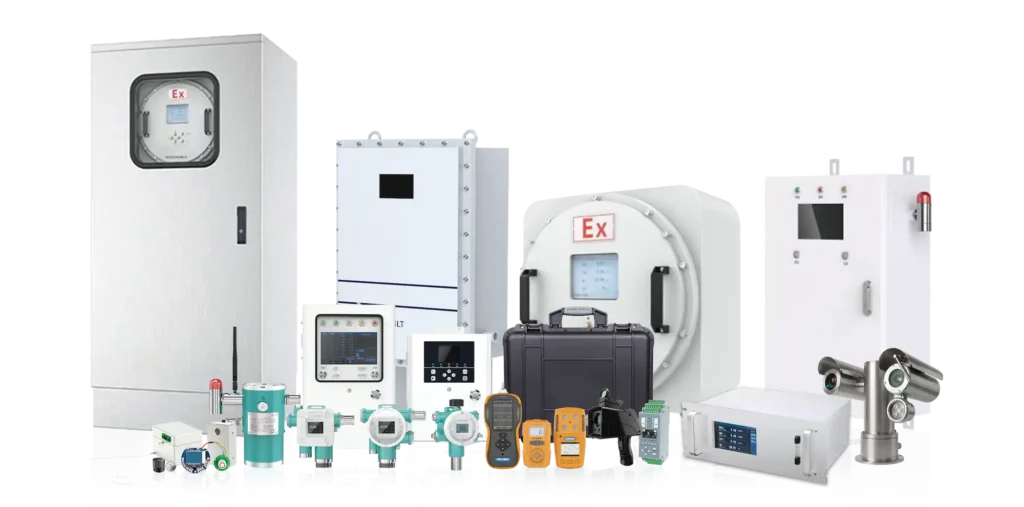
Published by HighSeek Technology. Keywords: SGD gas detector, battery leak detection, Battery room monitoring, BESS monitoring, HighSeek support.