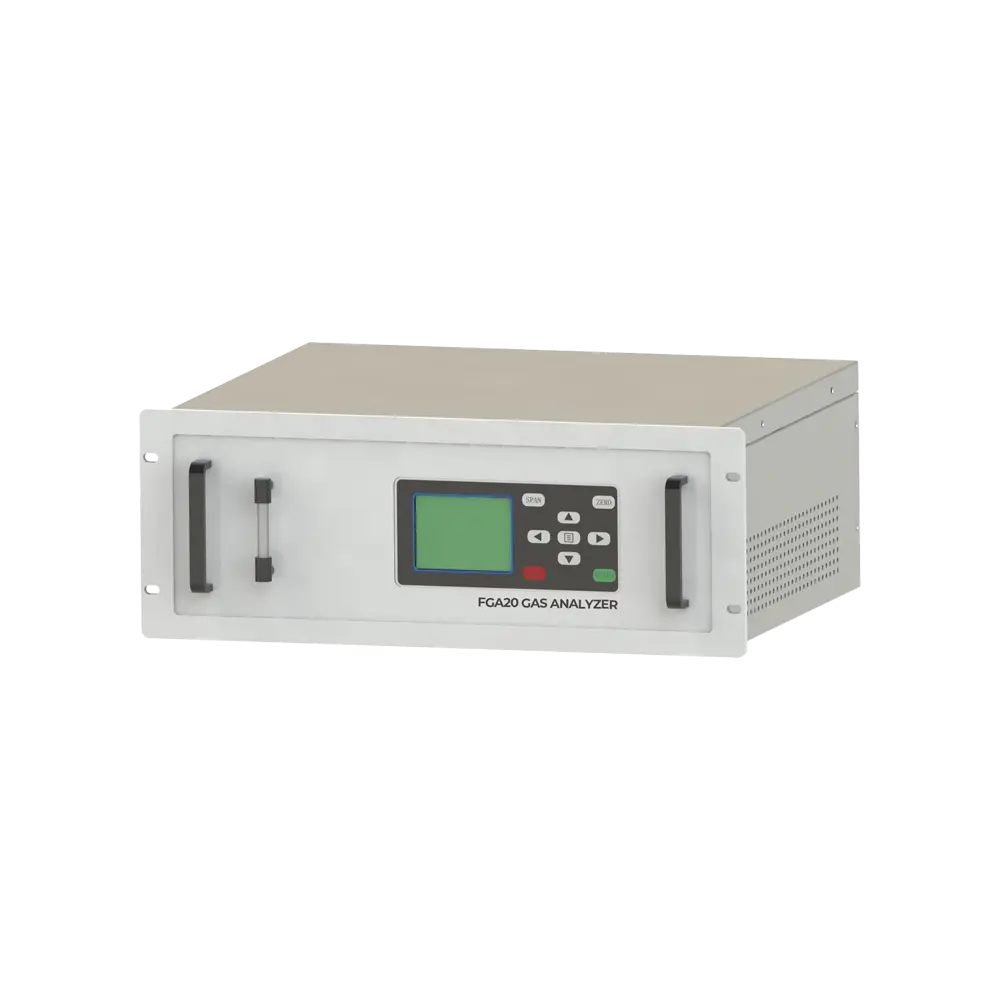
FGA20 Flue Gas Analyzer | HighSeek
Advanced Multi-Component Flue Gas Analysis for Continuous Emission Monitoring
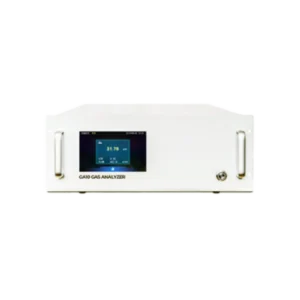
The FGA20 Flue Gas Analyzer is an advanced multi-component gas analysis system designed for continuous emission monitoring (CEMS) and industrial process control applications. Integrating ultraviolet absorption spectroscopy (UV), differential optical absorption spectroscopy (DOAS), and chemiluminescence detection technology where applicable, the FGA20 delivers accurate, reliable, and real-time measurement of multiple gas components in industrial flue gas.
The analyzer supports simultaneous monitoring of key gas components, including sulfur dioxide (SO2), nitric oxide (NO), nitrogen dioxide (NO2), nitrogen oxides (NOx), carbon monoxide (CO), carbon dioxide (CO2), and oxygen (O2).
Engineered for demanding industrial environments, the FGA20 combines advanced optical measurement technology, intelligent calibration functions, flexible signal interfaces, and remote diagnostic capabilities. Its modular measurement configuration and reliable performance make it an ideal solution for environmental monitoring, industrial emissions measurement, and combustion process optimization.
Key Features and Advantages
1. Advanced UV-DOAS Measurement Technology
Utilizes ultraviolet absorption spectroscopy and advanced chemometric algorithms to provide accurate and stable measurement of UV-active gas components. Supports real-time concentration monitoring and data transmission through multiple industrial communication interfaces.
2. Long-Life Pulsed Xenon Lamp
Equipped with a high-performance pulsed xenon light source designed for long-term operation, with a nominal service life of up to 10 years under specified operating conditions, reducing maintenance frequency and operating costs.
3. Direct NO2 Measurement for Improved NOx Accuracy
Directly measures NO2 rather than relying solely on NOx conversion, helping minimize conversion-related measurement errors and improve the accuracy of NOx concentration analysis.
4. Intelligent Automatic Calibration
Supports both manual and automatic zero and span calibration. Calibration can be triggered by predefined events, including scheduled timers and external switch inputs, helping maintain measurement accuracy and reduce manual maintenance requirements.
5. Flexible Signal Configuration and System Integration
Provides configurable analog inputs, analog outputs, relay outputs, and digital communication interfaces. Designed for seamless integration with CEMS platforms, PLCs, DCS systems, and other industrial monitoring and control equipment.
6. Dual-Range Measurement with Automatic Switching
Supports two measurement ranges for individual gas components, consisting of a low range and a high range, with a typical range ratio of 10:1. Range switching can be performed automatically, manually, or through external trigger signals to accommodate varying gas concentrations.
7. Optical Compensation and Signal Adjustment
Supports optical signal adjustment to compensate for signal attenuation caused by contamination or deposits on the gas chamber optical windows, helping maintain measurement stability during long-term operation.
8. Remote Configuration and Diagnostics
Supports remote parameter configuration and diagnostic analysis, enabling convenient system maintenance, operational monitoring, and troubleshooting.
Technical Specifications
Gas Measurement Parameters
| Gas Component | Measurement Range |
|---|---|
| SO2 | 0-100 / 0-5,000 ppm (Customizable) |
| NO | 0-100 / 0-5,000 ppm (Customizable) |
| NO2 | 0-100 / 0-5,000 ppm (Customizable) |
| NOx | 0-100 / 0-5,000 ppm (Customizable) |
| O2 | 0-25% vol (Customizable) |
| CO | 0-3,000 ppm (Customizable) |
| CO2 | 0-20% vol (Customizable) |
Performance Specifications
| Parameter | Specification |
|---|---|
| Repeatability | Less than 2% |
| Zero Drift | Less than ±2% F.S./week |
| Span Drift | Less than ±2% F.S./week |
| Response Time (T90) | 120 seconds |
| Operating Temperature | -10 to +50 °C |
| Light Source | Pulsed Xenon Lamp |
| Calibration | Manual and Automatic |
Electrical and Communication Interfaces
| Interface | Specification |
|---|---|
| Analog Input | 2 × 4-20 mA (Customizable) |
| Analog Output | 4 × 4-20 mA (Customizable) |
| Analog Output Load | Less than 800 Ω |
| Relay Output | 8 channels, DC 30 V / 2 A |
| Digital Communication | 1 × RS232, 1 × RS485 |
| Communication Protocol | Modbus |
General Specifications
| Parameter | Specification |
|---|---|
| Power Supply | 220 VAC ±20% |
| Power Consumption | 100 W |
| Dimensions (W × H × D) | 360 × 482 × 133.5 mm |
Typical Applications
- Continuous Emission Monitoring Systems (CEMS)
- Industrial Boiler Flue Gas Monitoring
- Power Generation and Thermal Power Plants
- Waste Incineration and Waste-to-Energy Facilities
- Cement and Building Materials Industries
- Steel and Metallurgical Industries
- Chemical and Petrochemical Processing
- Industrial Combustion and Process Optimization
- Environmental Compliance and Emission Control
Why Choose the FGA20 Flue Gas Analyzer?
The FGA20 is designed to meet the demanding requirements of modern industrial gas monitoring. By combining advanced spectroscopic measurement technologies, direct NO2 measurement, intelligent calibration, and flexible communication interfaces, it provides a reliable platform for multi-component flue gas analysis.
Whether deployed in continuous emission monitoring systems or industrial process control applications, the FGA20 helps operators improve measurement reliability, optimize combustion efficiency, and maintain better control over industrial emissions.
Contact our technical team to discuss your measurement requirements, customized gas ranges, and system integration solutions.
Frequently Asked Questions About Industrial Gas Analyzers
1. What is an industrial gas analyzer?
An industrial gas analyzer is an analytical instrument used to identify and measure the concentration of specific gas components in industrial processes, exhaust streams or environmental air. It helps operators monitor process conditions, optimize operations and support environmental management.
2. What types of industrial gas analyzers are available?
Common types of industrial gas analyzers include infrared (NDIR) analyzers, ultraviolet (UV) analyzers, tunable diode laser absorption spectroscopy (TDLAS) analyzers, flame ionization detector (FID) analyzers and electrochemical gas analyzers. The appropriate technology depends on the target gas, measurement range, sampling conditions and application requirements.
3. What is the difference between a gas analyzer and a gas detector?
A gas analyzer typically measures and quantifies the concentration or composition of specific gas components for process control, environmental monitoring or analytical applications. A gas detector is primarily designed to detect the presence of hazardous or combustible gases and provide alarms when predefined thresholds are reached.
4. What is a CEMS gas analyzer?
A CEMS gas analyzer is an analytical component of a Continuous Emission Monitoring System. It measures selected pollutants and other parameters in industrial exhaust gases. A complete CEMS may also include sampling systems, gas conditioning equipment, particulate monitors, data acquisition systems and other monitoring components.
5. What is a TDLAS gas analyzer used for?
A Tunable Diode Laser Absorption Spectroscopy (TDLAS) gas analyzer uses laser absorption characteristics at specific wavelengths to measure selected gas components. It is commonly used for real-time industrial process gas monitoring, particularly in applications requiring selective measurement under demanding operating conditions.
6. What is the difference between a flue gas analyzer and a process gas analyzer?
A flue gas analyzer is specifically designed to measure gas components in combustion exhaust or industrial emission streams. A process gas analyzer is used to monitor gas composition within industrial production processes. Their measurement parameters, sampling configurations and operating conditions depend on the application.
7. How do I choose the right industrial gas analyzer?
Selecting an appropriate gas analyzer requires consideration of the target gas components, measurement ranges, accuracy requirements, operating temperature, pressure, humidity, dust concentration, sampling method, installation conditions and applicable regulations. The measurement technology should be selected according to the specific application.
8. Can gas analyzers be integrated into a CEMS or industrial automation system?
Yes. Gas analyzers can be integrated into CEMS and industrial automation systems through compatible analog outputs, digital communication interfaces and control system connections. Available interfaces and integration options depend on the specific analyzer model.