

ite: 5 MW / 10 MWh BESS
Standards: UL 9540A, NFPA 855
Pilot: Tier-1 integrator, 12-week rollout
Executive summary
Thermal runaway in lithium-ion batteries emits trace gases before flames or smoke appear. This project integrated an advanced gas-sensing layer into the site’s safety architecture. By monitoring hydrogen (H2), carbon monoxide (CO), select VOCs (notably ethylene/propene), and oxygen (O2) levels, operations teams received reliable early warnings—enabling controlled shutdowns and targeted inspections while avoiding disruptive false alarms.

Challenge
Large, containerized BESS installations present concentrated risk: a single cell failure can cascade. Traditional smoke and temperature alarms often react late or generate nuisance alerts from HVAC activity. The operator needed an early-warning system that:
- Detects chemical signatures of early thermal events (pre-smoke)
- Minimizes false positives from nearby maintenance or ventilation
- Integrates with existing BMS, FMS and site SCADA
- Meets guidance from UL 9540A and local fire codes (NFPA 855)
Solution
The implemented solution combined sensor selection, placement, and analytics:
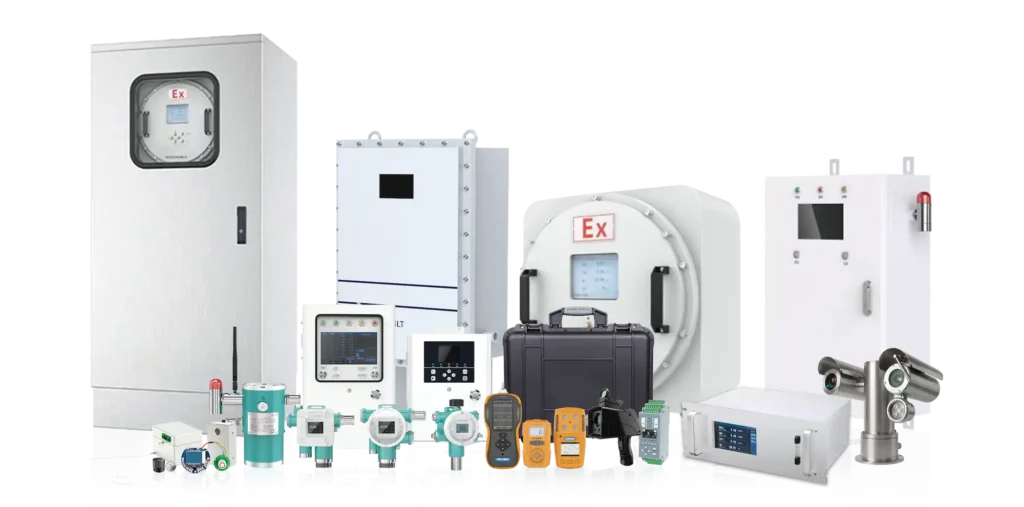
- Sensor array: dedicated H2 sensors (solid-state/electrochemical tuned for hydrogen), low-range CO electrochemical cells, PID-based VOC detectors for early cell decomposition markers (e.g., ethylene), and O2 sensors to detect depletion.
- Redundant zones: sensors in inverters, cell blocks, and HVAC intake/exhaust to localize source and reduce nuisance triggers.
- Edge analytics: rule-based thresholds plus short-term trending windows and cross-correlation between gases and temperature to suppress false alarms.
- Integration: BACnet/IP and MQTT bridges to the BMS and facility alarm panels; alarm tiers mapped to automated safety actions (e.g., forced ventilation, module isolation, operator alert).
Implementation highlights
Deployment was completed in 12 weeks with minimal operational disruption:
- Site survey and risk mapping to define sensor density and mounting heights;
- Factory calibration and cross-checks against reference gases;
- Phased installation to validate baselines and tune thresholds;
- Operator training and incident playbook updates aligned to the new detection tiers.
Outcomes
Key practical benefits observed during the pilot and first quarter of operation:
- Earlier detection: operators received pre-smoke alerts—on average 20–40 minutes before temperature- or smoke-based systems would have reacted in tested events.
- Fewer false alarms: cross-validated gas + temperature logic reduced nuisance events by an estimated 60% compared to standalone smoke alarms.
- Faster, targeted response: zone-localized alarms allowed teams to isolate modules quickly, minimizing downtime and maintenance scope.
- Regulatory alignment: documentation and sensor logs simplified UL 9540A test onboarding and local authority reviews.
Technical recommendations
For BESS operators planning similar projects:
- Prioritize hydrogen and low-ppm CO detection—H2 is a reliable early marker of electrolyte breakdown.
- Use VOC/PID sensors to flag organic decomposition gases; pair with temperature trends to avoid false positives.
- Implement sensor zoning and multiple mount heights to reliably localize leaks inside containerized racks.
- Adopt edge analytics that emphasize short-term trending and cross-sensor correlation rather than single-threshold triggers.
- Keep calibration schedules and on-site reference checks as part of preventive maintenance.
Lessons learned
Sensors are only as good as placement and analytics. Early pilots that treated detection as a single-sensor problem struggled with nuisance alarms. The combination of diverse sensor types, clear alarm tiers, and integration with operational processes produced a practical, repeatable improvement in safety posture.
Compliance & standards
This deployment was validated against industry best practices and referenced UL 9540A testing guidance and NFPA 855 permitting steps. When planning retrofits, include documentation for authorities having jurisdiction (AHJ) early to streamline approval.
Want a technical review customized to your site?
Contact HighSeek Technology for a no-obligation BESS gas-sensing audit and pilot plan